Ethics Committee
The Ethics Committee provides a focus for ethical analysis, consideration and response to public health challenges and issues, and advises and supports the Faculty in further embedding ethical principles and understanding into its activities, policies, practice and governance. You can read the Ethics Committee's terms of reference here.
The committee is chaired by Steven Bow (stevenbow@fph.org.uk) and the vice chair is Sridhar Venkatapuram (sridhar.venkatapuram@kcl.ac.uk). The committee is supported by carolinewren@fph.org.uk. A list of committee members can be found below.
Work plan for 2025
The Ethics Committee's workstreams for 2025 are:
- Ethical guidance to FPH Board - to provide a forum of relevant experts and stakeholders to advise the Board and partners on ethical dimensions, considerations and response to public health challenges and issues, with a view to supporting robust decision making and the work of the Faculty, in order to deliver FPH’s charitable objects and strategy across the UK. Focus topics include:
- Artificial intelligence in public health (joint project with AI & Digital Public Health Special Interest Group)
- Moral distress and injury in the public health workforce
- Honesty in public health communication
- UK and international partnerships and collaboration - to act as an expert source of knowledge and advice on public health ethics to the FPH, its various committees and its UK and international partners. and raising awareness and debate on public health ethical issues.
- Education and workforce development - to promote public health ethics education and development opportunities for the current and future workforce and provide guidance on the ethical knowledge and skills to support public health practice.
- Guidelines, comms and publications - to provide and disseminate strategic guidance and oversight in the field of public health ethics to the FPH, its various committees and its partners.
Special Interest Groups
The following special interest group reports to the Ethics Committee:
Meet the committee members
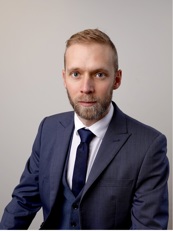
Steven Bow is a Fellow of the FPH, Chair of the FPH Ethics Committee and Public Health Ethics Special Interest Group, and currently working as a Consultant in Public Health leading the West Berkshire Council Public Health team. He has published papers on moral distress and injury in the public health workforce, and on public health ethics.
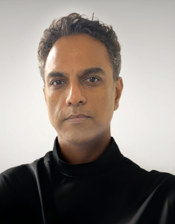
Sridhar Venkatapuram is an inter-disciplinary academic-practitioner in public/global health ethics and justice. He is an Associate Professor at King’s College London. He has over 30 years of public health experience and has worked with organizations including WHO (HQ), NHS, Wellcome Trust, BMA, Human Rights Watch, and others. He lectures widely and publishes research on public health and global health ethics; global and health justice philosophy; capabilities approach; social determinants of health; and health equity. His X name is @sridhartweet.
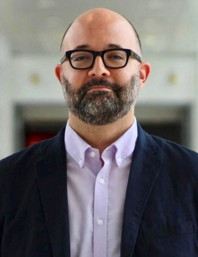
Dr. A.M. Viens is York Research Chair in Population Health Ethics and Law and Associate Professor of Global Health Policy at York University in Canada, where he was previously the Inaugural Director of the School of Global Health. He has degrees in philosophy and law from the Universities of Toronto, Oxford, and London. His research specialization focuses on population health (i.e., public health and global health) ethics and law, with a particular interest in demonstrating how philosophical analysis, legal epidemiology, and regulatory theory should shape how we approach different issues within global health policy, practice, and research (especially infectious diseases, disasters and emergencies, and health promotion). His latest book is Public Health Law: Ethics, Governance, and Regulation, co-authored with John Coggon and Keith Syrett (Routledge, 2017; second edition forthcoming). He is also an Honorary Member of the UK Faculty of Public Health, and a Fellow of the Royal Society of Public Health and the Royal Society of Medicine.

Dr Ardiana Gjini is the Executive Director of Public Health for Hywel Dda University Health Board, leading population health, prevention, and health equity across west Wales, along with other portfolio areas including emergency planning, children’s health, decarbonisation agenda. With a background spanning clinical practice, epidemiology, health protection and improvement, as well as academic practice, she is recognised for championing evidence-based policy and ethically grounded public health leadership.
Her work centres on reducing inequity, strengthening community resilience, and ensuring that health and care policy and strategical decisions uphold fairness, prudent funding and spending, transparency, and accountability. Dr Gjini is particularly committed to embedding ethical principles into everyday practice - whether guiding population-level interventions, maximising the benefits of our health service, developing a socially conscious model of health, or balancing individual autonomy with the collective good.
A key part of her work has focused on the ethical dimensions of immunisation, screening, cancer control, around the implications of individual’s consent and informed choice on wider communities and health services. For many years as a lead consultant in the area her commitment to ensuring that vaccination and screening programmes are delivered with transparency, respect for autonomy, and culturally sensitive communication, led her to develop herself and the wider workforce on issues of consent, incentives and penalties for public health programmes. During the years as a member of the UK NSC she paid particular attention to the ethical implications of screening —not only for individuals but also for families, communities, and the wider health service—balancing personal impact with population-level responsibilities and service sustainability.
Bruce is a retired Fellow of the Faculty and former Director of Public Health at Bath and North East Somerset Council.
Fiona Sim OBE is a public health physician, appraiser, former GP, and a visiting professor at the University of Bedfordshire. She has longstanding interests in addressing health inequalities, obesity, and capacity building for public health. She has past senior roles in public health, medical leadership and medical education. She was a former Chair of the Royal Society of Public Health and past Editor-in-Chief of Public Health.

Helen is an experienced public health consultant with broad experience in varied public health settings, a research doctorate, and a background in clinical medicine. She has a strong interest in ethics, health inequalities, digital healthcare, AI and screening, and is also a current member of the British Medical Journal Ethics Committee.
Jasmine is a specialty registrar in public health based in Wales.

John Coggon is Professor of Law in the Centre for Health, Law, and Society, at the University of Bristol Law School. He is author of the book ‘What Makes Health Public?’ (CUP, 2012). His work on law and the philosophy of public health contributes to research, teaching, policy, and practice.
Sir Jonathan is an Honorary Fellow of the Faculty of Public Health and Professor of Health Care Law at University College London.
Paul is a specialty registrar in public health based in Scotland.
Peter is Emeritus Professor of Public Health in the Institute of Psychiatry, Psychology and Neuroscience, Kings College London. In 1998 he was appointed the chief scientist on a BIOMED II project to create a European critical appraisal instrument for clinical guidelines. This resulted in the creation of the AGREE ( Appraising Guidelines, Research and Evaluation ) instrument which has been endorsed by the European Union, the World Health Organisation and the Council of Europe as the standard approach to assessing the quality of clinical guidelines. It has since been translated into 25 languages http://www.ncbi.nlm.nih.gov/pubmed/12571340. From 1999-2012 he was the Founding Clinical and Public Health Director of the National Institute for Health and Care Excellence (NICE).From 2013-2019 he was the Public Health Lead and Deputy Director of the National Institute for Health Research Collaboration for Leadership in Applied Health Research and Care (CLAHRC), South London.
From 2019-2023 he was the Public Health Lead and Deputy Director of the National Institute for Health funded Applied Research Collaboration South London. He is a Fellow of the Royal College of Physicians, the Royal College of General Practitioners and the Faculty of Public Health. His research and teaching interests are focused on achieving effective, efficient and fair health care systems. He has recently published “Making Health Public: a manifesto for a new social contract” and “NICE at 25 a quarter century of evidence values and innovation”
Rachel is a Consultant in Public Health in the South West of England. She had a medical background and longstanding interests in global health, human ‘flourishing’, justice and peace, and the creative arts.
Rachel is a joint member of the FPH Global Health and Ethics Committees, and is also chair of the FPH Yemen Special Interest Group and convenor of a small global network of ‘Public Health Practitioners for Peace’. She is keen to support our UK and global public health workforces to use ethics to explore and address complex public health issues.
Rob Davies is an independent Consultant in Public Health. He combines critical thinking with plain language writing to mobilise health science for public benefit, including for The Economist Ltd, the NHS and local government. His recent focus is advancing moral reasoning to strengthen decision-making in leadership and civic life.
Sarah is a Professor of Bioethics at University College London.
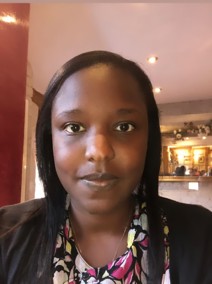
Sharifah Sekalala is a Professor of Global Health Law at the University of Warwick, Director of the Centre for Global Health Law (Warwick). She is currently a Visiting Professor at Witts University in South Africa and a Co-Director of University of Toronto/Warwick Global Health and Human Rights Training Program. She is an interdisciplinary researcher whose work is at the intersection of international law, public policy and global health. Professor Sekalala is particularly focused on the role of human rights frameworks in addressing global health inequalities. Her research has focused on health crises in Sub-Saharan Africa, international financing institutions and the rise of non-communicable diseases and she has published in leading legal, international relations and public health journals.

Simon is a Consultant in Public Health at Derbyshire County Council, leading on knowledge and intelligence, health care public health and wider determinants of health (including delivery of Household Support Fund and Welfare Rights). Simon is interested in understanding the ethical underpinnings of decision making in healthcare and public health, particularly around resource allocation and addressing health inequalities. He has collaborated in projects at Keele University and University of Liverpool to explore how philosophical concepts of desert and responsibility play out in professional practice. He is also interested in the ethical development of the public health workforce.
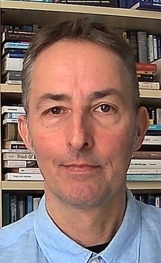
Thomas Schramme is Professor of Philosophy at the University of Liverpool. He specialises in moral and political philosophy, as well as philosophy of medicine. He has published the book Theories of Health Justice: Just Enough Health (2018) and co-edited the Handbook of the Philosophy of Medicine. Second Edition (2025).
Vikki is Professor of Health Services Research and Philosophy at the University of Aberdeen.